Money Savings Guidebook: Your Path to Financial Freedom and Peace
In a world where financial uncertainty is more prevalent than ever, the need for practical money management tools has never been greater. The Money Savings Guidebook offers a comprehensive, step-by-step approach to building smarter money habits that lead to lasting financial peace. Whether you're a professional, entrepreneur, or simply someone looking to take control of your finances, this guidebook provides the tools, mindset, and strategies needed to achieve financial freedom and confidence.
The Evolution of Personal Finance
Over the past decade, personal finance has evolved from a niche topic into a mainstream concern. With rising living costs, inflation, and economic instability, people are increasingly seeking ways to manage their money effectively. The shift toward digital banking, remote work, and gig economy opportunities has also changed how individuals earn, spend, and save. The Money Savings Guidebook addresses these modern realities by offering actionable advice tailored to today’s lifestyle and workflow.
Today’s professionals and creators often juggle multiple income streams, side hustles, and freelance projects. This complexity makes it harder to track expenses and maintain consistent savings. The Money Savings Guidebook recognizes this challenge and provides clear, adaptable strategies that fit into diverse financial situations. From budgeting techniques to debt management, the guidebook ensures users can apply its lessons regardless of their career path or financial background.
Why Smart Saving Habits Matter
At the heart of The Money Savings Guidebook is the belief that smart saving habits are the foundation of financial security. Many people struggle with saving because they lack a structured approach or feel overwhelmed by the idea of budgeting. This guidebook simplifies the process by breaking down key concepts into digestible steps.
One of the most effective methods taught in the guidebook is the 50/30/20 rule—a simple yet powerful way to allocate income. By dividing your earnings into needs, wants, and savings, you create a balanced financial plan that supports both short-term goals and long-term stability. This method is especially useful for freelancers and entrepreneurs who have irregular income cycles.
Moreover, the guidebook emphasizes the importance of starting small. Whether it's setting up an automatic savings plan or using apps to track spending, small changes can lead to significant results over time. For those new to financial planning, these incremental steps build confidence and reinforce the habit of mindful spending.
Debt-Free Living: A Path to Stress-Free Finances
Debt is one of the biggest obstacles to financial freedom, and The Money Savings Guidebook provides clear guidance on how to avoid and eliminate it. Many people find themselves trapped in cycles of credit card debt or student loans, which can be emotionally and financially draining. The guidebook helps users break free from these cycles by offering practical strategies such as debt repayment plans, credit score management, and avoiding high-interest traps.
For example, the guidebook introduces the avalanche method of debt repayment—prioritizing debts with the highest interest rates first. This strategy not only reduces the total amount paid over time but also minimizes stress by addressing the most pressing financial issues first. Additionally, the guidebook encourages users to build an emergency fund, which acts as a safety net and prevents the need for high-interest borrowing in times of unexpected expenses.
Mindset Matters: Cultivating Financial Discipline
While practical tools are essential, The Money Savings Guidebook also focuses on the psychological aspects of money management. It recognizes that financial success is not just about numbers—it’s about mindset. The guidebook includes positive affirmations and mindfulness exercises designed to help readers develop patience, discipline, and a long-term perspective on wealth.
Many people struggle with impulsive spending or procrastination when it comes to budgeting. The guidebook addresses these challenges by fostering a sense of accountability and self-awareness. Through real-life examples and relatable scenarios, it helps readers understand the emotional triggers behind their spending habits and learn how to make more intentional financial decisions.
Sustainable Living and Financial Wellness
Modern consumers are increasingly aware of the connection between their spending habits and their overall well-being. The Money Savings Guidebook aligns with this trend by promoting a sustainable lifestyle that supports both financial and mental health. It encourages practices such as minimalism, gratitude, and conscious consumption, which not only reduce unnecessary expenses but also enhance quality of life.
By focusing on what truly matters—health, relationships, and personal growth—the guidebook helps readers prioritize their spending in ways that align with their values. This holistic approach to money management ensures that financial decisions contribute to a more fulfilling and balanced life.
Design and Accessibility: Making Financial Tools Accessible
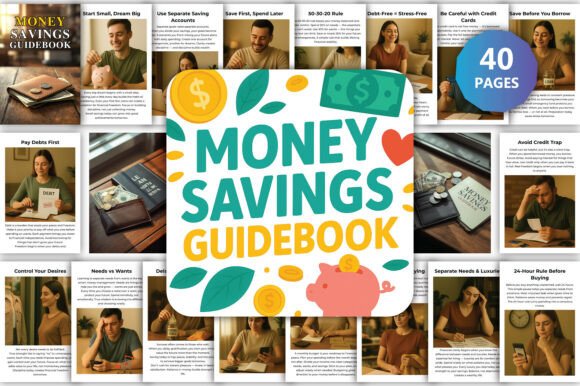
The Money Savings Guidebook is not just about content—it’s also about accessibility. The guidebook comes in various formats, including editable Canva templates, high-quality PDFs, JPG images, and printable pages, making it easy for users to customize and share. These design options cater to different user preferences and needs, whether someone prefers a digital version for convenience or a physical copy for reference.
The guidebook’s 40-page layout is thoughtfully designed to ensure clarity and ease of use. With a standard 6x9 inch page size and bleed-free margins, it’s optimized for professional printing while maintaining high-resolution quality at 300 DPI. These features make it ideal for educators, business owners, and professionals who want to use the guidebook as a resource or share it with clients and team members.
Conclusion
The Money Savings Guidebook is more than just a financial tool—it’s a transformative journey toward financial freedom, confidence, and peace. By combining practical strategies with a supportive mindset, it empowers readers to take control of their financial future. Whether you’re looking to build a budget, pay off debt, or cultivate a healthier relationship with money, this guidebook offers the insights and resources needed to succeed.