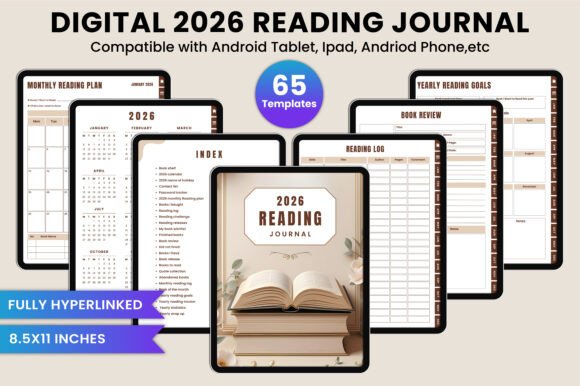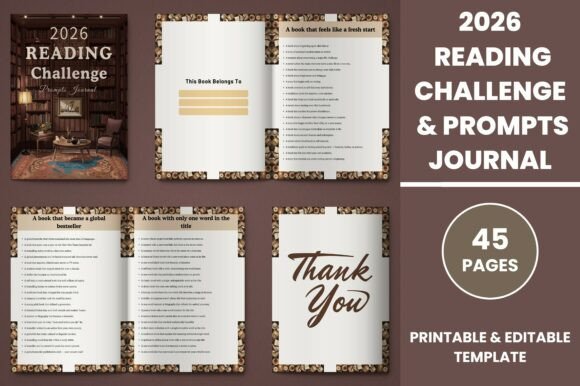
2026 Reading Challenge Prompts
In the ever-evolving world of graphic design, visual communication is more than just aesthetics—it’s about clarity, impact, and connection. The 2026 Reading Challenge Prompts journal offers a unique blend of creativity and structure, making it an invaluable resource for designers seeking inspiration and organization. Whether you're crafting brand identities or designing digital content, the prompts encourage a thoughtful approach to storytelling, which can be directly applied to visual projects.
Visual Design Meets Literary Exploration
The 2026 Reading Challenge Prompts are not just for book lovers—they’re also a powerful tool for designers looking to enhance their creative workflow. Each prompt acts as a visual design challenge, prompting you to think about how stories shape identity, evoke emotion, and communicate ideas. For instance, a prompt like “A story that takes place in your own country” can inspire a branding project that reflects cultural heritage through color palettes and typography choices.
Designers often face the challenge of creating content that resonates with audiences while maintaining visual coherence. The prompts help bridge this gap by encouraging a deeper understanding of narrative structure, which can be translated into compelling layouts and compositions. This makes the 2026 Reading Challenge Prompts an excellent source of design inspiration, especially when working on editorial layouts, packaging designs, or social media graphics.
Practical Applications in Graphic Design
From branding to web design, the 2026 Reading Challenge Prompts can be integrated into various design workflows. Here are a few practical applications:
- Branding and Logo Design: Use prompts like “A book that feels like a fresh start” to create logos that symbolize renewal and innovation.
- Social Media Content: Turn prompts into themed posts that align with your brand voice and visual style.
- Website and UI Design: Incorporate story-based elements into user interfaces to improve engagement and emotional connection.
- Editorial Layouts: Apply narrative structures to magazine pages or blog posts for a more engaging reading experience.
- Packaging Design: Use prompts to craft packaging that tells a story, enhancing the overall brand experience.
These applications demonstrate how the 2026 Reading Challenge Prompts can serve as a foundation for creative problem-solving in graphic design. By integrating literary themes into visual projects, designers can create more meaningful and impactful work.
Designing with Purpose and Clarity
When working with the 2026 Reading Challenge Prompts, consider factors such as consistency, readability, scalability, and visual hierarchy. These principles are essential for ensuring that your design communicates effectively across different platforms and mediums. For example, a well-structured prompt can guide the use of typography and color to maintain brand identity while keeping the audience engaged.
Typography plays a crucial role in both the journal and any design project inspired by its prompts. Choosing the right fonts can enhance readability and reinforce the tone of your message. Similarly, color palettes should reflect the mood and theme of each prompt, contributing to a cohesive and professional look.
Ultimately, the 2026 Reading Challenge Prompts offer more than just a reading plan—they provide a framework for thoughtful design. By embracing the power of storytelling in visual communication, designers can elevate their work and create more meaningful connections with their audience.